Houseplant Care: The Importance of Fertilizing
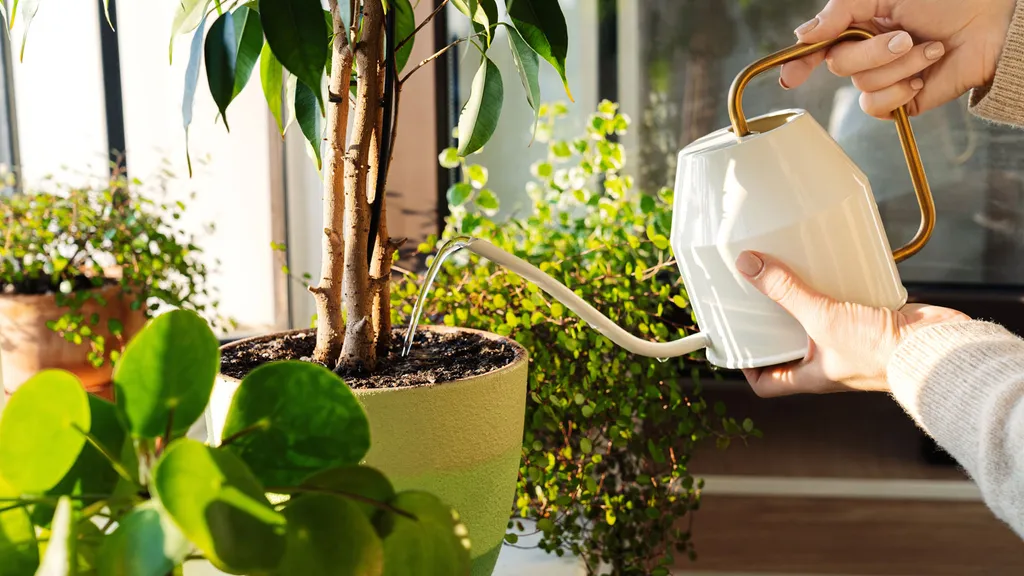
When it comes to keeping houseplants healthy, most people focus on light and watering—but fertilizing is just as crucial. You can find indoor plant fertilizers at any nursery or garden center, or even make your own. But which type works best for different growth stages? When should you fertilize, and when is it better to wait?
Setting up a good fertilizing schedule tailored to each plant’s needs ensures they get the right nutrients at the right time—especially important for potted plants. Even the toughest houseplants thrive with a little nutritional boost, and getting it right isn’t complicated. Here’s what you need to know…
Why Fertilize Indoor Plants?
Potting soil only holds so many nutrients. Over time, plants absorb what’s available, and some minerals wash away during watering. Eventually, the soil runs low on the stuff that keeps plants growing strong.
You could repot, but many plants dislike being moved. A better solution? Regular feeding with indoor plant fertilizer to replenish those lost nutrients. Even succulents—like those grown in a Terrarium Mason Jar Kit (available at the Gardening Know How Shop)—benefit from a well-timed dose.
Best Fertilizers for Houseplants
Most indoor plant fertilizers contain three key nutrients: nitrogen (N), phosphorus (P), and potassium (K). These are listed as a ratio on the package (like 10-10-10). You might also see trace minerals included.
- Foliage plants usually need more nitrogen.
- Flowering/fruiting plants thrive with extra phosphorus.
- A balanced fertilizer (10-10-10) works well as an all-purpose option.
How Often to Fertilize
It depends on the plant and the season. Skip fertilizing in winter when growth slows. Come spring, longer days and warmer temps kickstart new growth.
- Slow-release fertilizers feed plants for months—just 1-2 applications per year.
- Water-soluble types need applying every few months.
- Diluted liquid fertilizer can be used every couple of weeks.
Succulents? Once in spring is enough. Heavy feeders (like Philodendron Painted Lady or Pink Princess—available at our shop) do best with biweekly diluted feedings. Dieffenbachia also loves monthly meals during its growing season.
When to Fertilize
Most plants grow actively from March to November, but exceptions exist (like those under grow lights or in sunny south/west windows). Rule of thumb: Fertilize during active growth. If unsure, check for new shoots.
Liquid fertilizers often suggest monthly use, but plants absorb nutrients slowly, and excess washes out during watering. Solution? Dilute and feed every two weeks.
Hold off if:
- The plant is newly bought or repotted.
How to Fertilize Houseplants
Figuring out the best approach takes some trial and error. Over time, you’ll learn what works based on the plant’s type, environment, and care.
Fertilizer options:
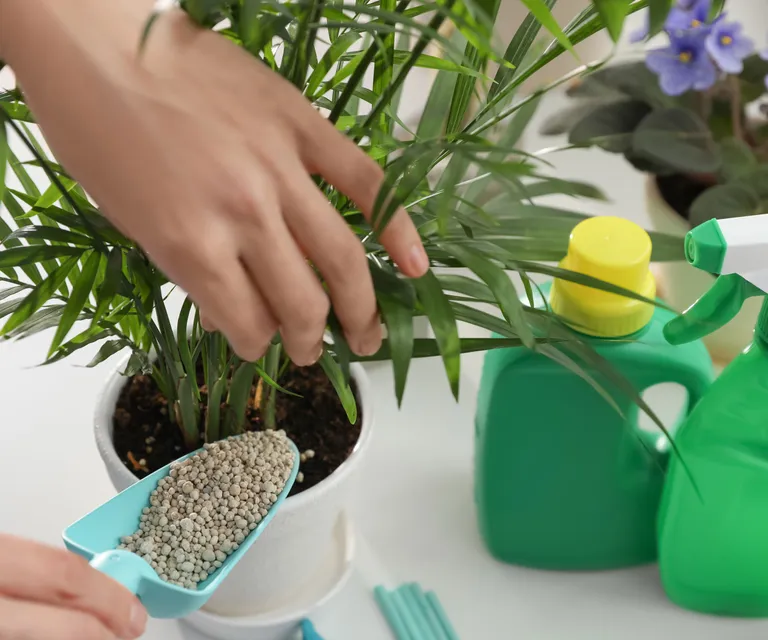
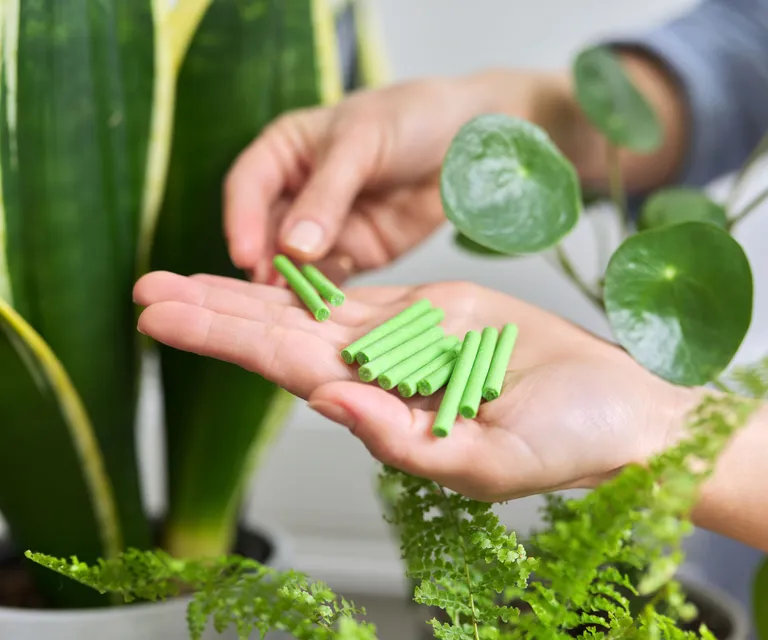
- Granules/spikes: Slow-release; feed for months. Push spikes into soil near roots.
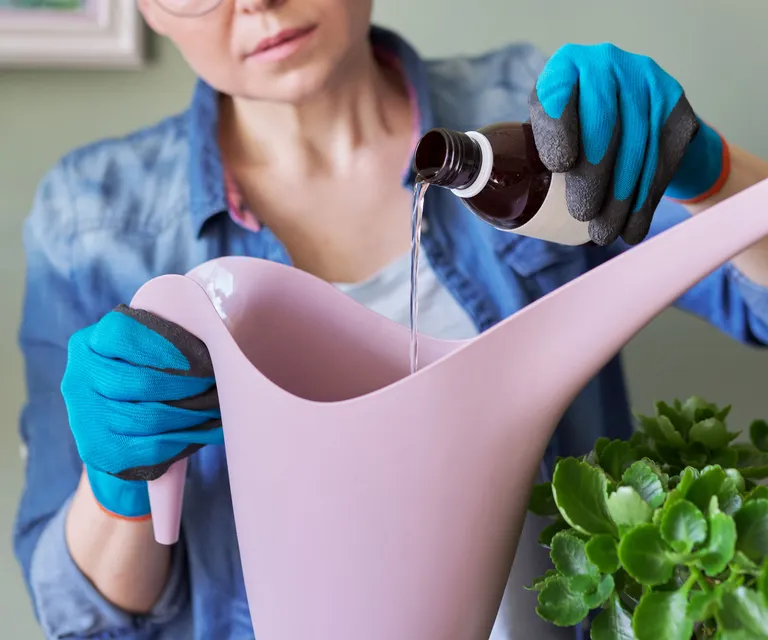
- Liquids/concentrates: Mix with water and apply to soil.
- Foliar sprays: Can be DIY’d for extra nutrients.
FAQs
How to avoid over-fertilizing?
Don’t add extra if your potting mix already has slow-release food. Too much fertilizer burns roots, harms leaves, and causes weak growth. Always follow instructions.
Tip: Leach plants yearly by flushing soil with water to remove salt buildup.
Should I fertilize sick plants?
No. Wilting or poor health usually stems from pests, disease, or care issues—not hunger. Never fertilize dry soil; it won’t absorb nutrients properly.
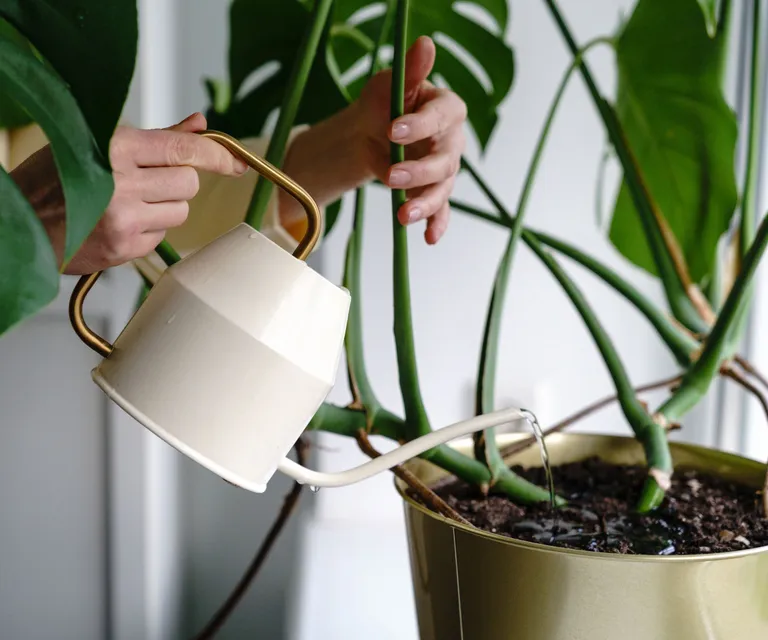
Simplify feeding with the Cleo Houseplant Watering Set from Crescent Garden (available in the GKH Shop)—a stylish way to apply liquid fertilizer!
More Houseplant Inspiration
- Brighten dull corners with clever plant combos.
- Best apartment plants for small spaces.
- Vertical displays to elevate your greenery.
- Hydroponic houseplants? Our guide makes it easy.
Stock up on indoor gardening essentials—tools, trays, pots, and more—at the Gardening Know How Shop!